AI Transformation for a Corporate Travel Business: Wy-Go
How Digital Dialog is helping Wy-Go reduce spreadsheet-heavy administration, streamline operational workflows and introduce practical AI solutions into corporate travel and event management.
- Client: Wy-Go
- Sector: Corporate travel and events
- Engagement: AI consultancy, workflow implementation and team training
- Engagement commenced: July 2026
- Last updated: October 2026
The challenge: reducing manual work in corporate travel operations
Managing corporate travel and incentive programmes involves considerable coordination, with large amounts of information moving between travellers, suppliers, booking systems and event management teams.
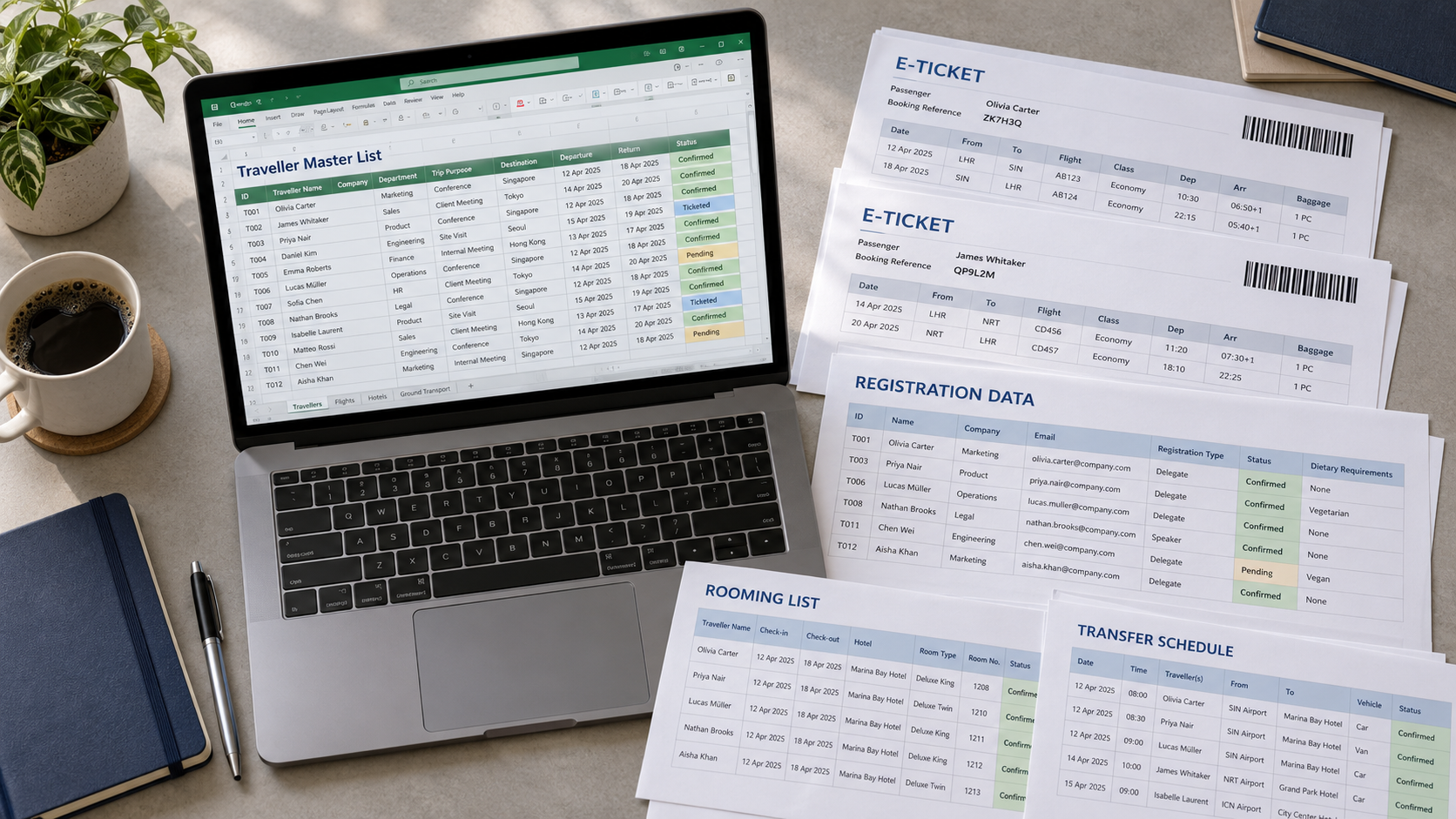
Wy-Go’s operations are heavily dependent on spreadsheets, with much of the day-to-day administration involving manually entering, updating, reorganising and checking information across multiple files. This creates a considerable administrative workload, particularly when managing complex travel programmes where new information is continually being added and existing details frequently change.
The team also spends significant time preparing costings, presentations and operational documents, often working with information that already exists elsewhere in the business.
Wy-Go recognised the potential for AI to make these processes more efficient and engaged Digital Dialog to identify practical opportunities for automation and help introduce AI into its operations.
Identifying opportunities for AI and automation
Our engagement began with detailed discussions with Wy-Go’s management and operational team to understand how work moves through the business and where manual effort accumulates.
We examined the different stages of planning and managing corporate travel programmes, identifying opportunities across trip planning, costings, traveller administration, travel arrangements, documentation and other recurring activities.
The discovery process revealed a consistent pattern: considerable staff time is spent transferring, checking and reorganising information that already exists in different systems and documents.
Working with the Wy-Go team, we identified and prioritised opportunities where AI and automation could make a meaningful difference.
One area stood out as an immediate priority: reducing the extensive manual work involved in managing and maintaining operational information across spreadsheets.
From AI opportunities to practical implementation
We’ve built purpose-designed AI agents and reusable skills to take on repetitive spreadsheet work, including registration imports and flight-information processing.
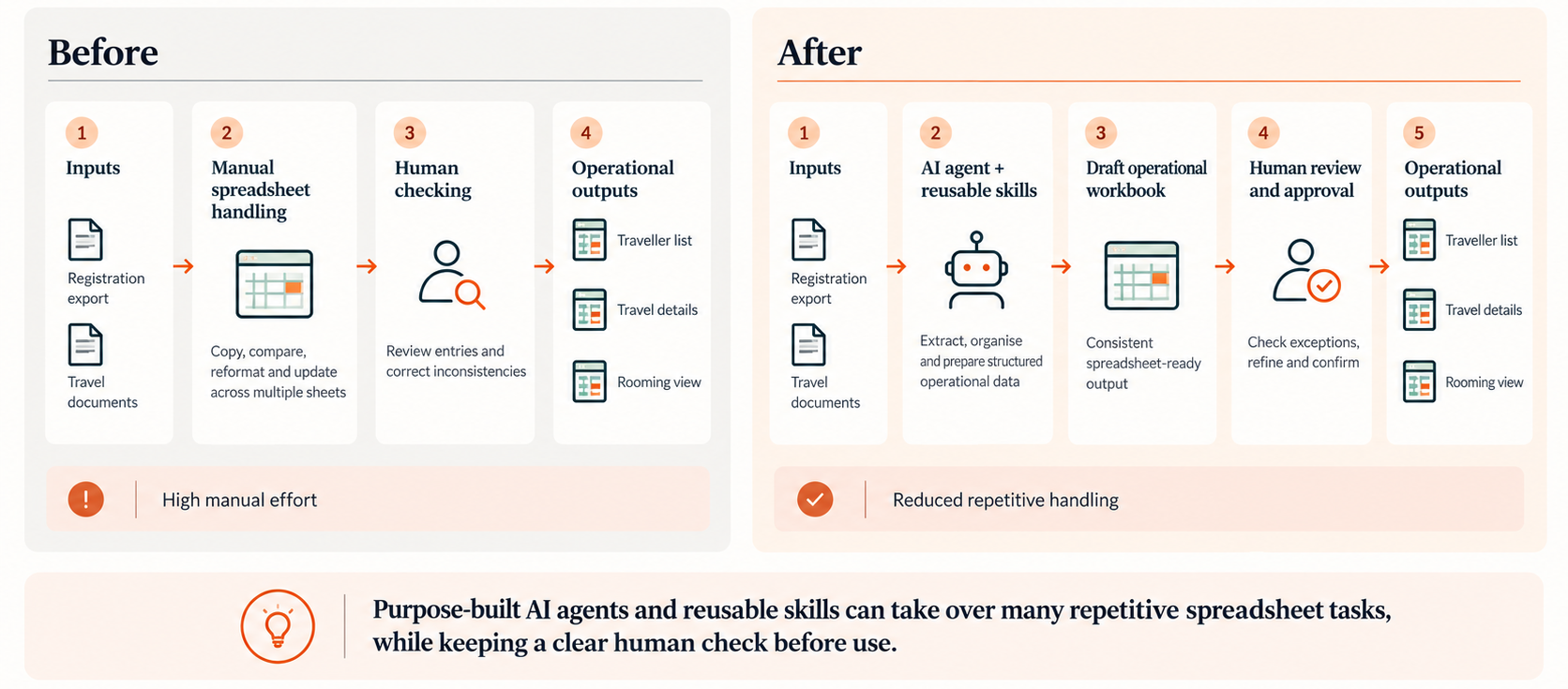
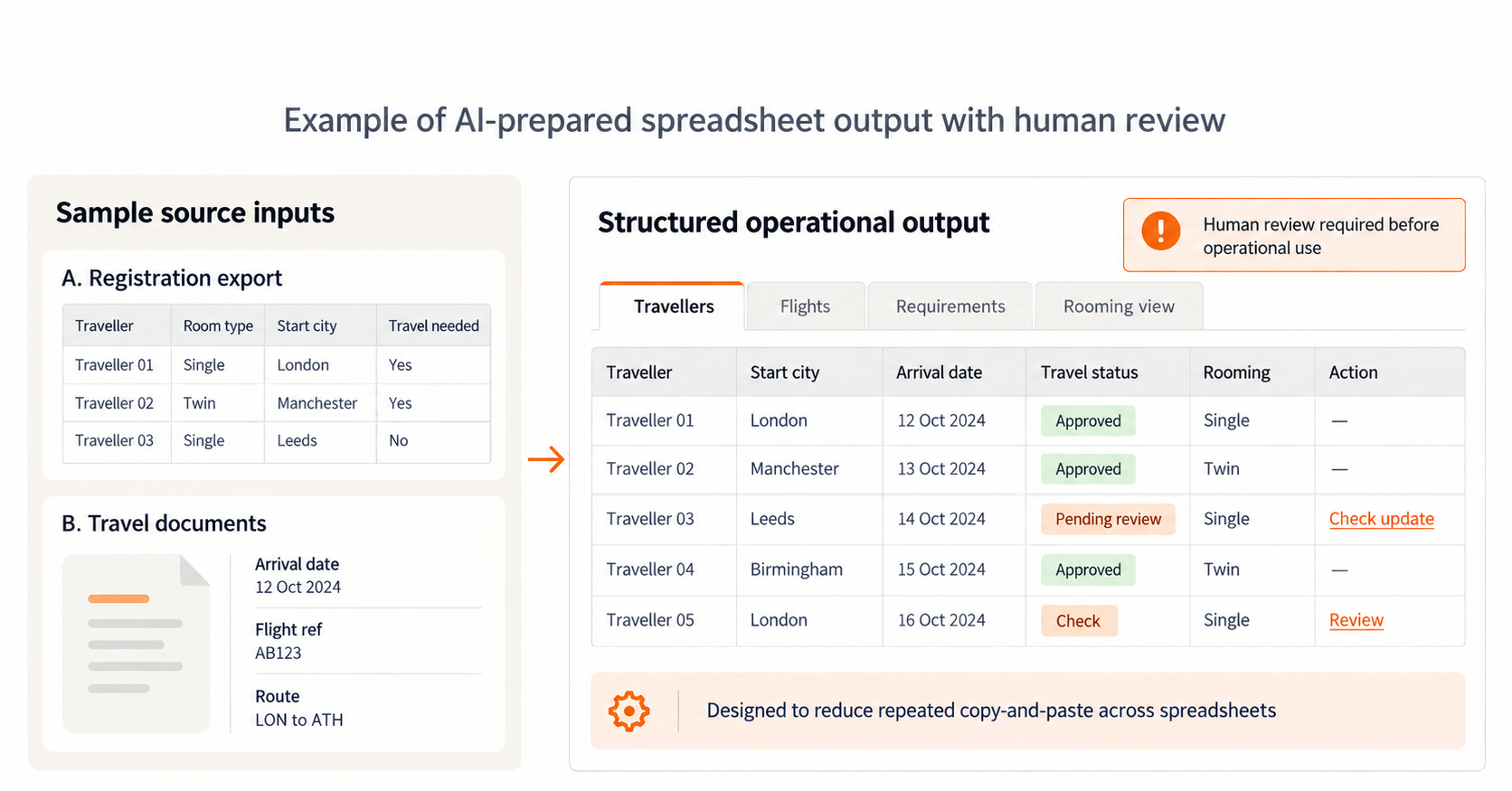
One agent imports registration data from source exports into a reusable master workbook. This workflow has been tested successfully against multiple registration files. A separate flight-management agent is designed to read e-ticket PDFs, match passengers to existing traveller records, and add or update the relevant flight information. The workflows apply defined business rules and workbook checks, with ambiguous matches or conflicting details flagged for review. The initial package includes the workbook template, agents, reusable skills and setup guidance.

Building AI adoption across the team
Technology implementation is only one part of the engagement.
Digital Dialog is also helping Wy-Go develop the internal skills and confidence needed to make AI part of its day-to-day operations.
The next phase focuses on helping the team adopt the new workflows and develop a practical understanding of how AI can support their individual responsibilities.
This includes training in the use of AI assistants, understanding their capabilities and limitations, and recognising where human judgement and oversight remain important.
The wider objective is to help Wy-Go establish a more efficient way of working, where AI supports routine operational processes and employees can devote more attention to activities requiring their experience and expertise.
For more on developing this capability across a travel business, read our guide to AI adoption in travel companies.
Reducing repetitive data work in corporate travel
Corporate travel involves a continuous flow of new information as well as frequent changes to existing details. Wy-Go’s project shows how purpose-built AI agents can take on repeatable data-handling and spreadsheet tasks, while people remain responsible for reviewing exceptions and confirming operational decisions.
AI consultancy for travel and tourism businesses
Digital Dialog works with corporate travel, tourism, events and hospitality businesses to identify practical AI opportunities and turn them into working solutions.
Our services include AI opportunity discovery, workflow assessment, use-case prioritisation, AI agents and automation development, implementation support and team training.
Want to reduce repetitive administration in your travel business? Talk to Digital Dialog about identifying and implementing practical AI workflows.
Frequently asked questions
What does AI implementation look like in a corporate travel business?
AI implementation can involve identifying repetitive operational tasks, developing tailored AI agents and improving how information is processed and managed across existing business workflows. At Wy-Go, Digital Dialog has progressed from assessing operational requirements to developing and testing practical AI solutions, with team adoption and training forming part of the wider engagement.
How can AI reduce manual administration in travel operations?
AI agents and reusable skills can take on repetitive tasks such as processing, organising and preparing information that would otherwise require significant manual spreadsheet work. Our work with Wy-Go focuses on introducing these capabilities into existing operations, reducing the need for repeated manual data handling and creating more consistent workflows.
Where should a travel business start when identifying AI opportunities?
Our experience with Wy-Go suggests starting with the operational tasks that consume significant staff time, particularly those involving repetitive data entry, document processing and information moving between systems. Examining those workflows with the people responsible for them helps identify practical opportunities and establish which should be prioritised for implementation.